
Homeless: The Only Way This Works

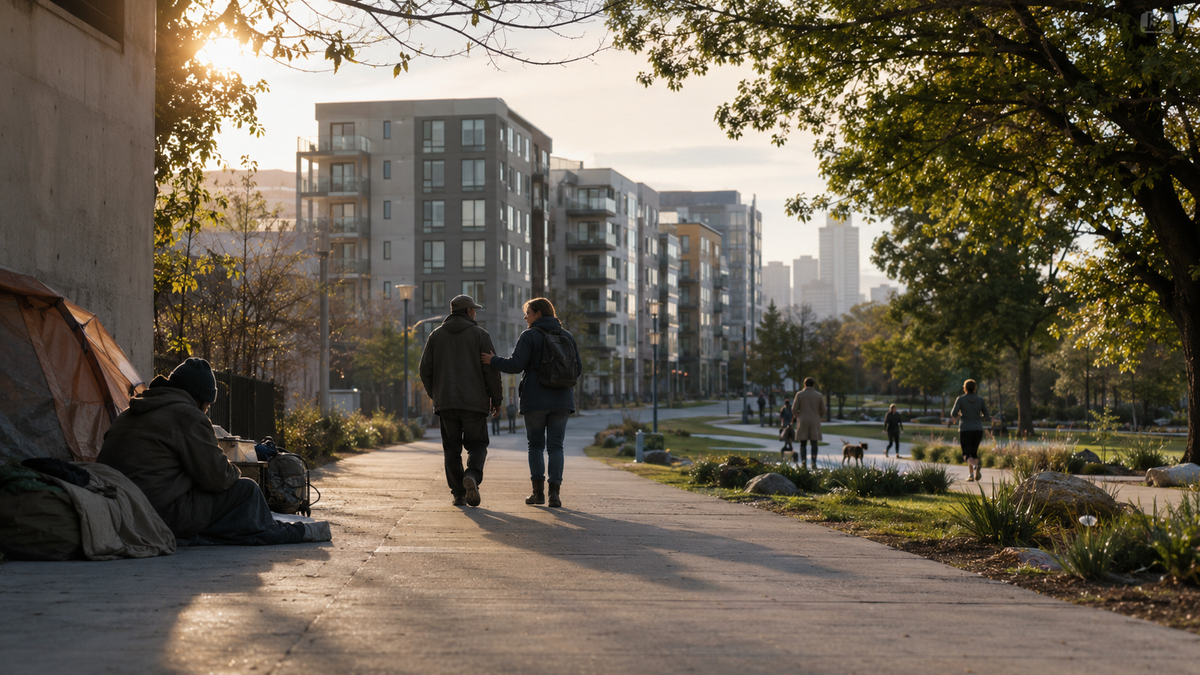
A realistic “both and” response to homelessness
Voice & Vision | Homelessness and the Public Commons, Part 8 | The synthesis
Homeless: Rights, Equity, and the Limits of Force, Part 7.
By now the pattern should be clear. Homelessness persists because it’s not one problem with one lever. It’s a layered system, and the arguments around it are layered too.
One person is reacting to a housing market that pushed them out. Another is reacting to addiction and mental illness that turned a setback into a long stay. A resident is reacting to a park that no longer functions. A business owner is reacting to lost foot traffic and constant cleanup. A nurse is reacting to revolving-door crises that never stabilize. A policymaker is reacting to fragmented agencies and impossible timelines. An advocate is reacting to a long history of coercion and abuse. A taxpayer is reacting to spending that feels endless and results that feel invisible.
All of those reactions can be rooted in reality. The conflict comes from pretending only one is.
The reasons to help are not sentimental. Homelessness is a human life collapsing in public. It is also a civic stress test. When it is unmanaged, it spreads costs into ERs, EMS, policing, sanitation, courts, schools, and neighborhood stability. Helping is not only charity. It’s prevention, public safety, fiscal responsibility, and moral legitimacy. A society that learns to step around suffering without responding becomes a colder society, and it eventually pays for that coldness in more ways than money.
The reasons people resist helping are also not always cruelty. They are reacting to fear, disorder, distrust, and concentration of burden. They don’t want their children stepping over needles. They don’t want public space to become permanent crisis territory. They don’t want their neighborhood turned into the region’s pressure valve. They don’t trust government promises because they’ve watched money get spent while disorder remains. They worry that compassion is being exploited and that boundaries are disappearing.
If you want a response that lasts, you have to honor both realities without lying to either side.
That means three commitments.
First, reduce the inflow. Prevention is the fastest, cheapest, and most humane homelessness policy, and it should not be treated as an afterthought. Keep people housed before they fall out. Rental assistance before eviction. Legal help early. Flexible emergency funds. Benefits that can be accessed without months of waiting. Housing supply that matches incomes, not only what the market can extract. Regional responsibility so the burden isn’t concentrated in a few neighborhoods.
Second, build exits that match reality. Not slogans, exits. Safe shelter that people will actually use. Low-barrier stabilization for immediate safety. Real mental health crisis capacity. Detox and treatment slots that exist. Supportive housing for those who need long-term support. Workflows that don’t require a person to behave like a housed person while they’re living outside. If the pipeline is clogged, the street becomes the waiting room. If the pipeline moves, people exit.
Third, restore the commons with legitimacy. Public space needs standards. Standards need enforcement. Enforcement needs alternatives. A city cannot function if the commons collapse, and it should not ask residents to accept open-ended disorder as a permanent lifestyle. At the same time, “restoring the commons” cannot be a euphemism for punishment. The only stable approach is boundaries paired with real pathways out, so compliance is possible and enforcement is legitimate.
If you do these three things, you get something cities are starving for right now: trust. Residents can tolerate disruption if they believe it is temporary and managed. They will revolt if they believe it is permanent and indifferent. People experiencing homelessness can accept help if the help is real, safe, and reachable. They will refuse if it feels like danger, humiliation, or a maze.
Homelessness is one of those problems that reveals what a society values, not in speeches, but in systems. Do we prevent collapse before it becomes public? Do we build pathways that stabilize people in crisis? Do we protect the commons so a city can still be shared? Do we respect rights while refusing to confuse abandonment with compassion?
There is no perfect solution. But there is a workable one. It’s layered. It’s coordinated. It’s measurable. It’s honest about tradeoffs. And it refuses the false choice between cruelty and surrender.
That’s the only way this works. But, will it ever happen?