What Happened with the VFW

When the uniform came and the mission never returned
Mostly True Stories | The Last Barstool Series, Part 3 | Purpose, drift, and the empty hall
Catch up with part 1, The Disconnect at the VFW.
The uniforms came off, but the structure stayed. The ranks, the rituals, the same stories told by the same people in the same seats. Only the mission was missing.
Somewhere between the draft and the digital age, the institutions that once united veterans stopped updating their purpose. The VFW, the Legion, the VVA, all built in an era when service meant belonging, and belonging meant community. Time marched on for the rest of the world, but it froze inside those halls. What broke wasn’t service. It was the mission that used to give service a place to land.
The photos on the walls aged, but the faces didn’t change, and the conversations stopped growing. The world kept moving, the bar did not.
The Freeze
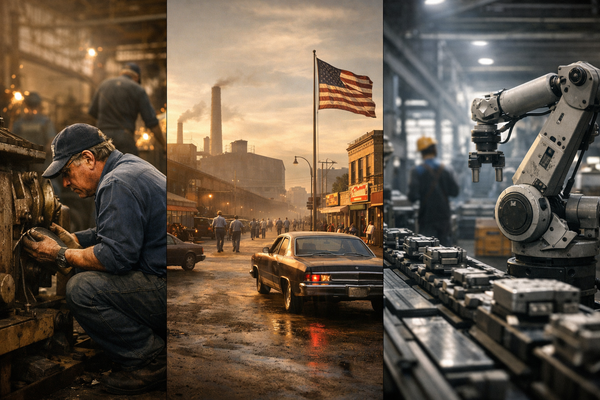
When World War II ended, the VFW and American Legion were booming. They were more than bars. They were civic centers, organizing drives, supporting families, building parks, raising flags. They had a public role, and that role gave the place a point.
Over time, a lot of that outward mission thinned. Membership aged. The civic work became less visible. Many halls drifted toward a simpler identity, a cheap drink, a familiar room, a place to replay the old stories with people who already knew the language.
By the time Iraq and Afghanistan veterans came home, they were walking into rooms built for earlier wars. Same rules, same expectations, same arguments. For many of us, it felt like visiting a relative who hadn’t noticed the calendar flipped decades ago. There wasn’t malice, but there wasn’t comfort either.
It’s easier to replay the past than to risk facing what the present has become. The language of pride stayed loud but the mission evaporated.
The Drift
The longer I sat in those halls, the clearer it became. The fracture wasn’t only political, it was generational.
Older veterans built their identities in a time when patriotism meant trust in institutions, the flag, the church, the government. Younger veterans came home to find those same institutions questioned, fractured, or openly distrusted. That difference mattered. It changed what people wanted from these places.
The old guard leaned harder into nostalgia. The younger ones looked for relevance and found resentment instead.
The barstools became a kind of boundary line. Not left versus right exactly, more then versus now, with politics added as fuel. And in that constant heat, something quieter died, the belief that service still carried a shared meaning.
The Human Side
I used to think ideology was what turned those places sour. Now I think it’s something simpler, loneliness.
The veterans at those bars aren’t villains. Many are relics of a time when purpose was clear and brotherhood was automatic. But when the uniform came off, so did the daily mission. When you take away purpose from people built around it, what’s left is pride. Pride can be healthy, but pride without a place to go hardens fast.
Maybe what we’re seeing isn’t hatred as much as loss. The loss of identity. The loss of relevance. The loss of being needed. When you feel unseen, you cling to what made you matter once. For many, that’s the past. So they defend it loudly, fiercely, and endlessly, even as it slips further away.
The New Mission
The hardest thing to admit is that the old mission isn’t coming back. The world these halls were built for doesn’t exist anymore. But that doesn’t mean service has to die with it.
Maybe the new mission isn’t about defending borders or symbols. Maybe it’s about rebuilding trust, not just between veterans and civilians, but between Americans who’ve forgotten how to talk to one another. That mission doesn’t need a uniform or a rank. It needs humility, the kind that says we used to serve something bigger than ourselves, and it might be time to relearn what that felt like.
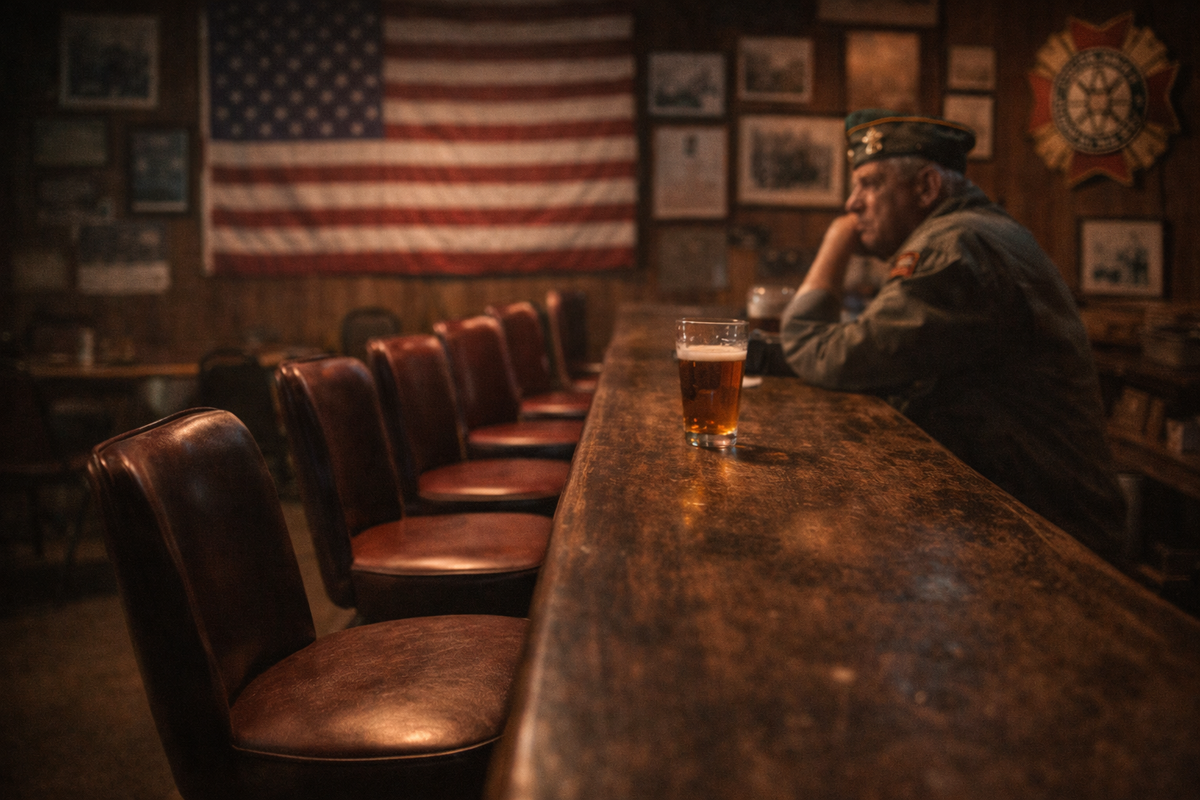
If we can’t find a new mission in a changed country, those rooms will keep emptying out. Not just the barstools, but the sense of belonging they were supposed to hold.