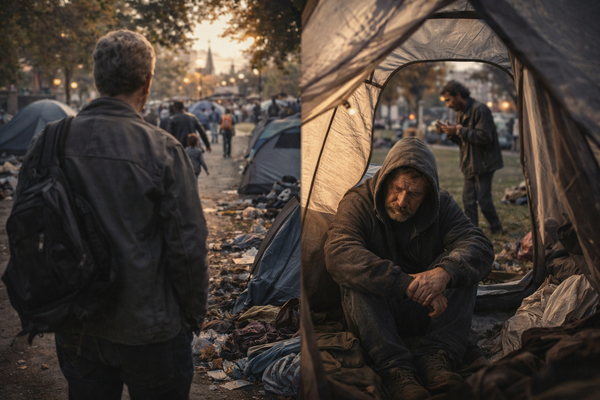
The Housing Pressure Cooker

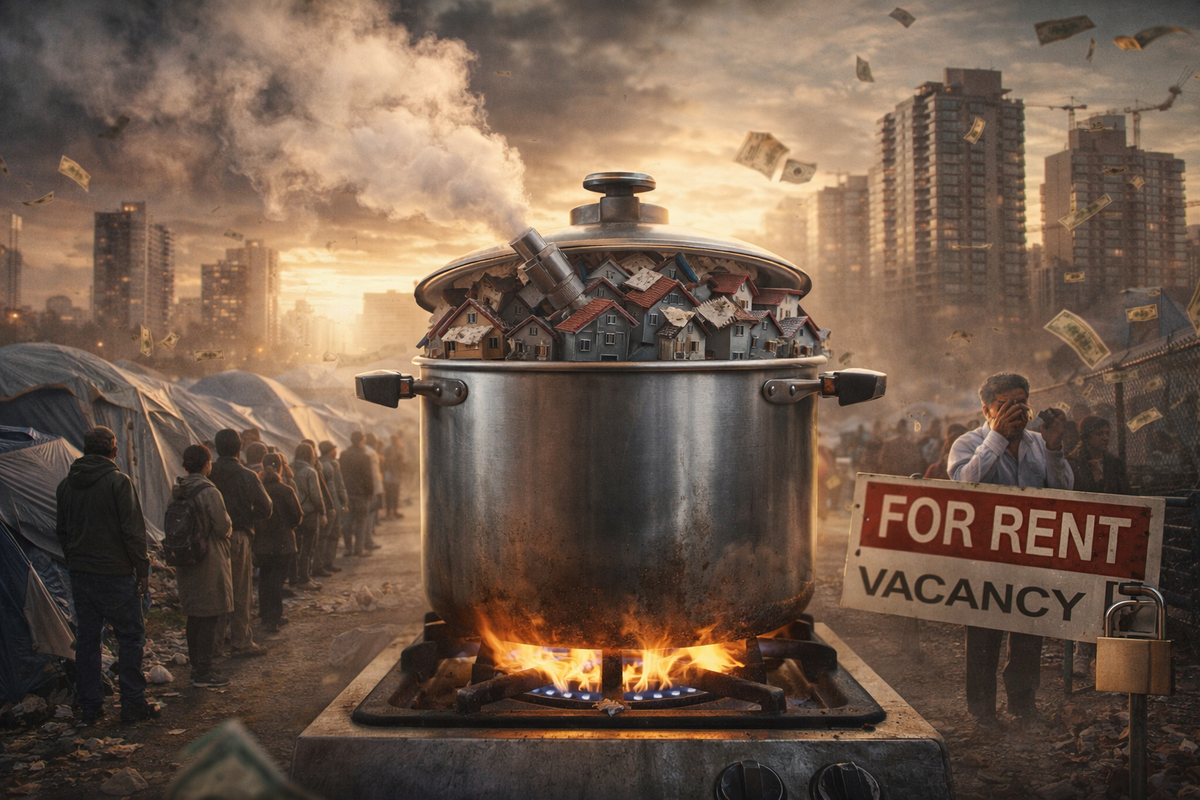
Why homelessness grows at scale
Voice & Vision | Homelessness and the Public Commons, Part 2 | Structural drivers
Part 1 of this series, Homelessness is a Layered Problem.
When homelessness rises in a region, people rush to the most dramatic explanations because dramatic explanations feel satisfying. They let you blame someone. They let you pick a side. That let’s you pretend the solution is a moral correction.
But if you want to understand homelessness at scale, you have to start with boring math and quiet cliff edges.
Here’s the structural reality. Housing is the stabilizer of modern life. When housing becomes scarce and expensive, instability spreads outward like a crack in glass. It doesn’t hit everyone equally, but it hits enough people to change the numbers.
Think about the people who look fine from the outside. They’re working, paying rent, and functioning. They’re also one bad month away from a mess. They don’t say that at parties, but many people have too much month left at the end of the money.
You see it when a household gets nudged by something ordinary. A landlord raises rent, work schedules change, a car breaks down. Sometimes it’s an unexpected medical bill, a relationship ends, or a parent gets sick. None of these things are scandalous. They’re just life. The problem is that in a tight housing market, life becomes a trap door.
Once someone falls out of housing, climbing back in is harder than most people realize. It’s not just money. It’s screening. A past eviction. Bad credit. A gap in employment. A misdemeanor from ten years ago. Lack of references. A need for a deposit that might as well be a down payment. When vacancy is tight, landlords can be picky, and the people who are already shaken become the easiest to exclude. This is how structural pressure turns into homelessness without needing a single dramatic personal failure.
The second structural engine is income instability. Jobs are not as steady as we pretend. Hours fluctuate. Layoffs happen. Wages lag behind cost of living. Benefits are uneven. Many people are doing math every month, and the math is getting worse. If your rent is already half your take-home pay, you don’t have to be irresponsible to lose, just unlucky.
Now we get to the often unhelpful safety net. This is where the structural story becomes frustrating. Programs exist, but tend to be slow, complex, and brittle. Vouchers have waitlists. Rental assistance requires paperwork. Benefits require documentation and follow-through that people in crisis often can’t manage. Shelters fill up. Eligibility rules exclude people with pets, or couples, maybe active substance use or untreated mental illness, or people who can’t comply with rigid schedules or rules. The system frequently asks for stability as the price of receiving stability.
This is why “just get help” is sometimes a cruel sentence, even when it’s spoken with good intentions. Many people do try but find they hit closed doors. So they wait, but then miss a step. Then they get disqualified or sent to the beginning of the line, again. Often, this is where many give up.
There’s also a regional truth people avoid. Homelessness isn’t just about the city where tents are visible. It’s about the housing market that spans the region. When the region doesn’t build enough housing, or doesn’t build housing that matches local incomes, the pressure concentrates where services and tolerance concentrate. Then a few neighborhoods become the pressure valve for an entire metro area. That is how you get the political explosion. Residents feel like they’ve been drafted into a problem they didn’t create, and they don’t see a timeline for relief.
So what does structural competence look like, in plain language? It starts with prevention that moves fast. If someone is behind on rent but still employed, it’s cheaper and more humane to keep them housed than to pay for emergency responses after they fall out. That means short-term rental support, eviction prevention, legal help early, flexible emergency funds, and systems that don’t take months to respond to an immediate crisis.
It also means building housing that matches incomes. Not only luxury units at “market rate” defined by a market that is already broken. A city can build forever and still fail if it keeps building houses that most residents can’t afford. The point isn’t “build anything.” The point is “build what the wage structure can actually support.” And it means regional responsibility, because homelessness is a regional outcome. If one city becomes the place where services exist and enforcement is lighter, that city becomes the place where the crisis concentrates. That’s not morality. That’s gravity.
Here’s the blunt truth. If we don’t reduce the inflow, we will be funding crisis response forever. If we don’t widen the exits, we will be clearing camps forever. If we don’t treat housing as essential infrastructure rather than a speculative commodity, we will keep manufacturing instability.
Part 2 is not meant to be inspirational. It’s meant to be clarifying. We can argue about values all day but the pipeline still exists. If we keep feeding it, the homeless camps will keep filling up.
Part 3, The Accelerants is where we talk about why some people can’t bounce back even when the housing math is fixed on paper.