The Last Shift
When the Machines Clock In and We Clock Out
Voice & Vision | The Changing Face of Work
By TLS
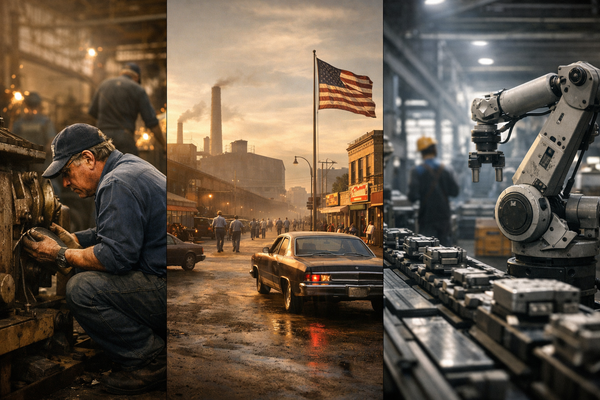
For much of the twentieth century, a manufacturing job was a ticket to a stable, middle-class life. You did not need a degree, just a willingness to show up, work hard, and learn the rhythm of the line. Steel, auto, textiles, and electronics built not only products, but communities. Entire towns thrived on the steady hum of machinery and the reliable promise of a paycheck every Friday. The work was physical, sometimes brutal, but it paid the bills, bought homes, and sent kids to college. It was dignity made tangible.
Then the ground began to shift. Over the past few decades, the global economy changed faster than the factories could adapt. Companies realized they could move production overseas and cut costs overnight. Cheaper labor, fewer regulations, and lower taxes made it an easy decision. The result was a hollowing out of America’s industrial heart. The jobs that once built neighborhoods, supported schools, and sustained small towns disappeared almost entirely. For many workers, it felt like betrayal disguised as progress.
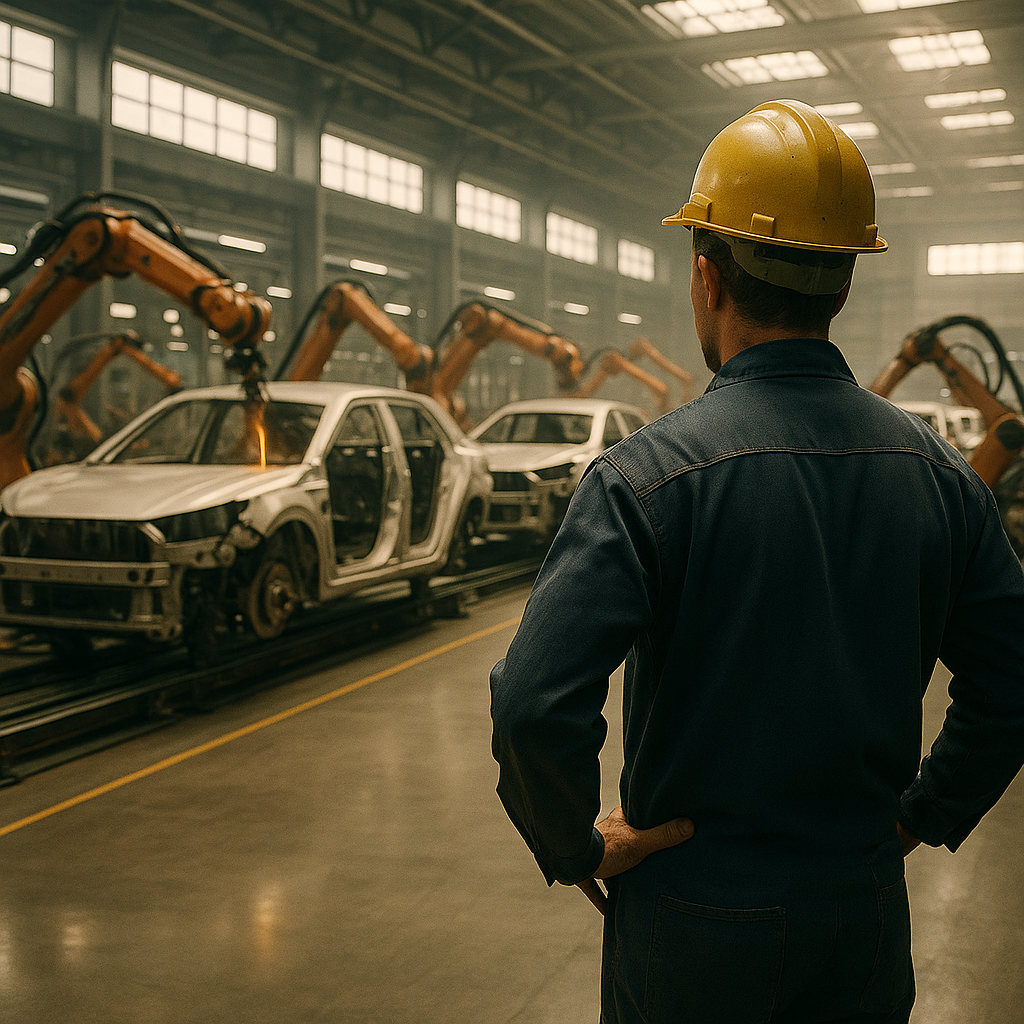
At first, the message was that manufacturing would return someday. Politicians promised it, executives hinted at it, and people wanted to believe it. A few plants reopened, often subsidized by taxpayers, but the reality was not the same. The new factories were smaller, quieter, and mostly automated. Machines replaced entire shifts. The same floor that once needed a hundred workers now ran on ten. Those who were rehired found themselves managing screens and sensors instead of wrenches and welders. It was not the same kind of work, and it certainly was not available to everyone.
The simple truth is that manual labor in the United States is expensive. Wages, benefits, insurance, and safety regulations all add up. Overseas, companies found workers willing or forced to work for a fraction of the cost. Automation then added a second blow. Robots do not need breaks, health insurance, or pensions. They do not strike or quit. Once the cost of building and maintaining them dropped below the cost of paying people, the outcome became inevitable. Machines became the better investment.
Now, standing on the edge of the next industrial revolution, we are watching the fusion of robotics and artificial intelligence accelerate that trend beyond anything seen before. Smart machines are no longer just programmable, they are adaptable. They can see, learn, and adjust faster than any human could. AI-driven systems can monitor supply chains, design improvements, predict maintenance needs, and even train other machines. In other words, the factory of tomorrow will run itself. Humans will supervise, not participate.
The problem is not just economic, it is human. Most manufacturing laborers will not transition into the new world of automation and AI. Not because they are incapable of learning, but because the new work is not built for them. The old factory rewarded endurance, precision, and reliability. The new one rewards digital literacy, coding, and abstract reasoning. Those are completely different skill sets, and retraining a sixty-year-old welder to program neural networks is not realistic.
The hard truth is that millions of people are simply built for physical work. They understand effort you can see and results you can hold. The satisfaction of a day’s labor is in the product itself. Automation robs them of that. You cannot feel pride in an algorithm’s output or a machine’s perfection. For many, that loss of purpose may be worse than the loss of income.
So what do they do instead? That is the question no one in power seems eager to answer. Some will fall into the gig economy, driving, delivering, and hustling for whatever is left between the cracks. Others may retreat into resentment or despair, convinced the world took something from them and never looked back. A few may find new trades in repair, construction, or small-scale craftsmanship, fields that still require a human touch, but even those opportunities are shrinking. Automation does not just eliminate jobs. It erases identities.
This is not about blame, it is about reality. The world moves toward efficiency because efficiency wins. Every generation faces its own reckoning with change, and this is ours. What once required muscle now requires data. What once rewarded repetition now rewards creativity. The question is whether we will prepare people for that shift, or just watch another wave of workers drown in its wake.
Manufacturing built America, but it may not save it. The new economy demands builders of a different kind, those who can design, program, and maintain the systems that replaced the assembly line. The dignity of work is not gone, it has only changed its tools. The tragedy would be if we leave behind the very people who built those tools in the first place.
If this essay resonated with you, please share it.
Forward it to someone who may find value and meaning within.
And if you want to keep following this conversation about the changing shape of America, subscribe and join the discussion below. Continue with part 2, Built by Hand.