Moscow’s Mission: After the Click, The Damage You Cannot Count.

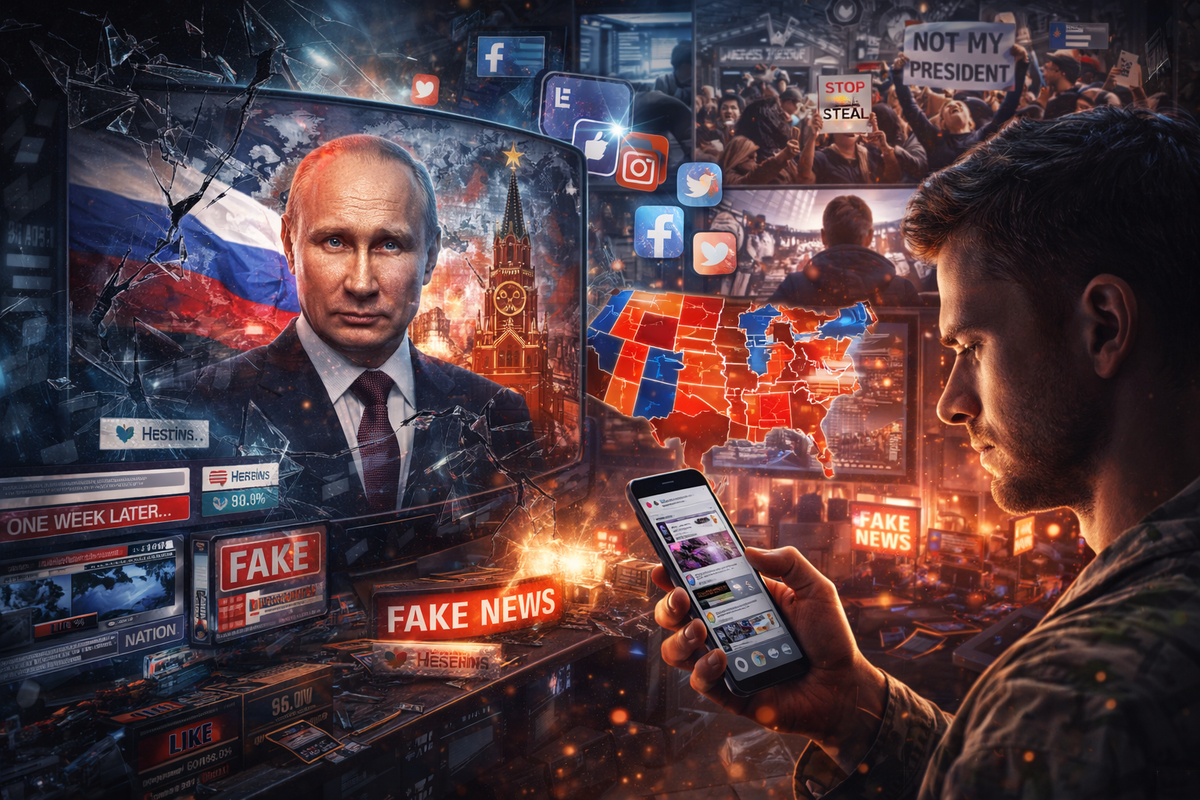
Why the Most Lasting Damage Happened After the Ballots Were Counted
Voice & Vision | Moscow’s Mission, Part 3
Catch up with part 2 Moscow's Mission: Inside the Troll Farm.
The most important effects of 2016 didn’t live in vote totals. They lived in what people paid attention to, what they trusted, and whom they believed. U.S. intelligence describes Russia’s campaign as “multifaceted,” aimed at weakening faith in democratic processes as much as at advantaging a candidate. That means the day after the election was part of the goal. If people doubt the rules, the referees, and one another, mission accomplished, even after the ballots are counted. (ODNI; SSCI)
When researchers looked for clean, causal proof that online influence changed large numbers of votes, the results were mixed or modest. That’s not a free pass however. It’s a reminder that the most durable outcomes were about agenda setting and emotion, not mass conversion. You can flood a feed with a topic, frame it in outrage, and push it into mainstream coverage without moving a single voter directly. The temperature and pressure still rises. The ground still shifts, the collapse ever closer. (PNAS; Science 2023 Facebook and Instagram experiments)
Americans felt the shift. Long before “deepfake” became a household word, people were already reporting that made-up news and information were a major national problem that harmed confidence in government and in one another. The numbers vary by year, but the pattern is steady. Trust eroded, suspicion grew and the baseline belief that institutions act in good faith kept slipping. (Pew Research Center)
“Hack and leak” supercharged this pattern. Stolen material didn’t need to persuade on its own. It only needed to land in an environment already primed to reward heat over context. Once emails and files entered the bloodstream, the same pages and personas that had been stoking identity fights amplified the drops, while traditional outlets chased the novelty. The effect was not a single mind changed but it was weeks of attention reallocated, and the pressure kept growing. (Mueller Report; SSCI)
Measurement is hard for a reason. People are not lab mice. Exposure is uneven. Effects decay. Platforms filter. Researchers often find large volumes of contact with political content, but the strongest, most measurable shifts tend to cluster among the already engaged. That leaves the quieter losses undercounted, like the steady normalization of “maybe none of this is real.” Those losses matter because democracies need shared premises even more than shared candidates. (PNAS; Science 2023 Facebook and Instagram experiments)
What changed in us is easy to describe and hard to fix. We became faster to forward and slower to verify. We learned to treat screenshots as proof and corrections as opinion. We rewarded confidence more than competence. And we taught ourselves to consume politics like entertainment, then wondered why the plot lines kept getting stranger. Adversaries didn’t invent those habits. They savagely exploited them. (Pew Research Center; ODNI)
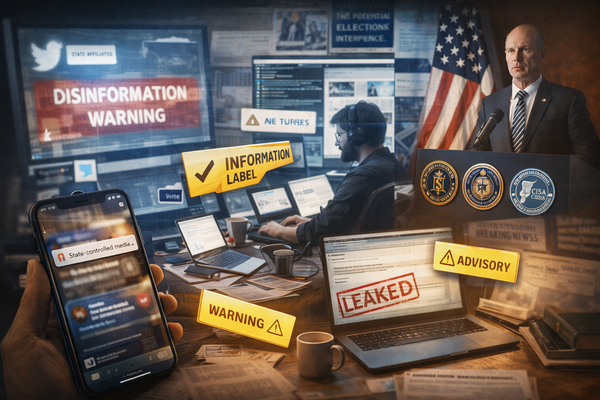
Platforms tried to respond. Labels appeared, archives opened, and networks were taken down. Those steps helped, and they also taught influence operators what to avoid next time. Fewer obvious tells. More cross-posting through real users, more local flavor. More audio and video, which travel faster and are harder to police at scale. The result wasn’t silence. It was adaptation. (ODNI; Meta disclosures)
If you want one clean takeaway from the research record, let it be this. The biggest casualty was shared reality. Not because everyone believed the same falsehood, but because enough people stopped believing anything could be reliably true. That fog is useful to anyone who wants power without accountability. It is also very hard to clear once it settles in. (ODNI; Pew Research Center)
Next in Part 4, New Rules, Old Tricks we look at the response loop, from labels and takedowns to the workarounds that followed, and why patching holes while the boat is moving is the only option we have.
If this helped you name the damage you cannot count, share it with one person who thinks “no proven vote flips” means “no real harm.”
Sources
ODNI — Declassified assessments on Russian interference and foreign influence in the 2016 and 2020 election cycles.
SSCI — U.S. Senate Select Committee on Intelligence, multi-volume bipartisan report on Russian active measures and social media operations.
Mueller Report — Report on the Investigation into Russian Interference in the 2016 Presidential Election, Vol. I.
Pew Research Center — Surveys on trust, misinformation, and perceptions of the news environment.
Science (2023) — Facebook and Instagram experiments during the 2020 U.S. election, estimating exposure and limited but measurable effects in specific contexts.
Meta disclosures — Public reports on “coordinated inauthentic behavior” and takedown archives.