Finding Our Way Back
But maybe we never really lost the country
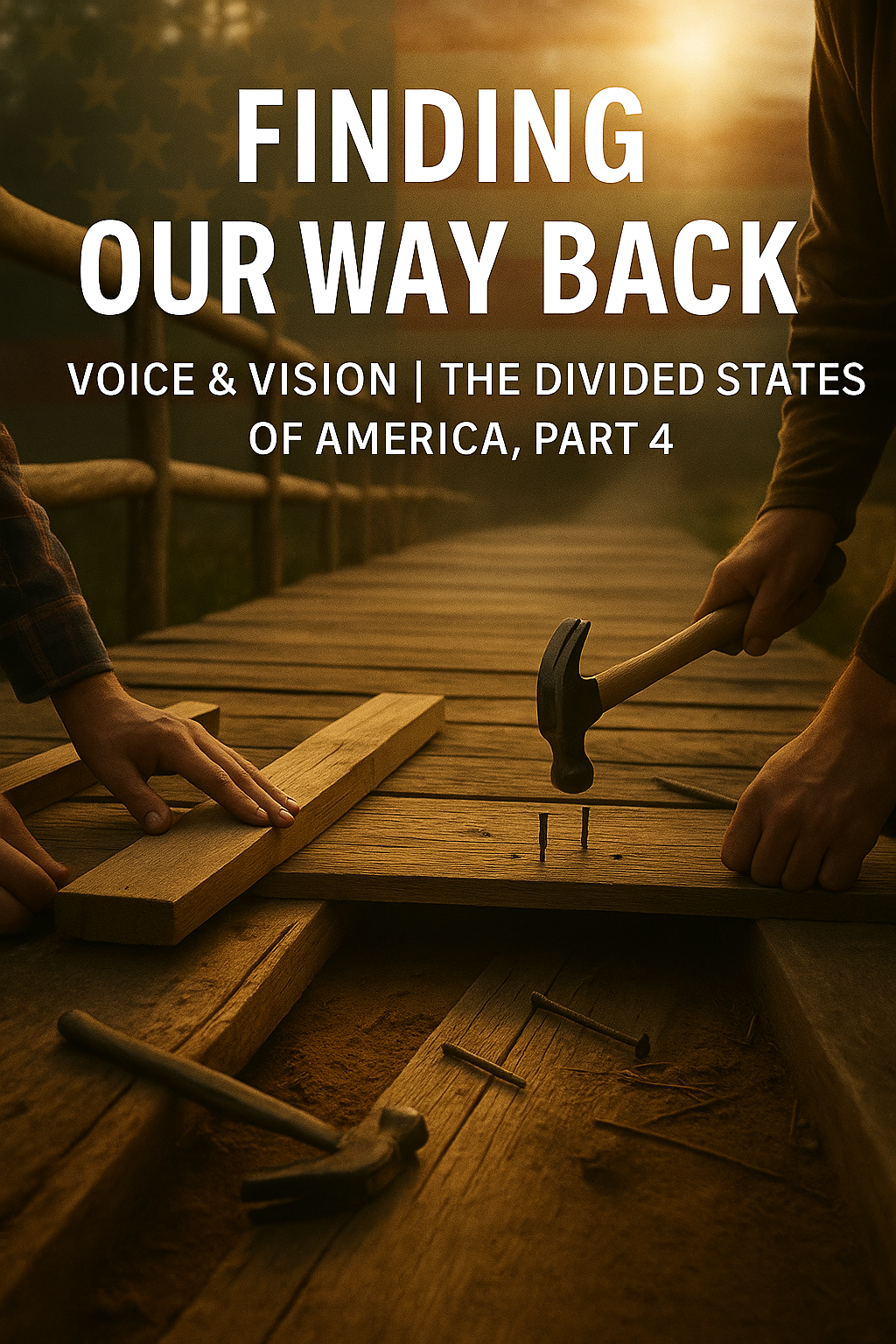
Voice & Vision | The Divided States of America, Part 4
By TLS
If you haven’t yet, catch up with part 3: Fear vs Trust.
We talk a lot about losing the country, but maybe what we’ve really lost is our way back to each other.
The noise is constant, the tension exhausting. Every argument feels like the last one, and every headline seems to say we’ve crossed another line that cannot be uncrossed. People are tired. Tired of fighting, tired of hating, tired of being told to pick a side.
But maybe the bridge home still exists. Maybe we just stopped crossing it.
What Connection Still Looks Like
If you look past the noise, you can still see America working.
Neighbors still lend tools. Strangers still stop to help when someone’s car breaks down. Teachers still show up for kids from every background, every morning. Volunteers still fight fires, stock food banks, and check on older neighbors after storms. The country we fear we lost is still quietly working the night shift.
The loudest voices always get the spotlight, and they are almost always the ones tearing things down. In between those flashes of outrage, most of the country is still out there quietly holding it together. We just don’t see it on our screens.
The Scale Problem
Division feels enormous because we keep staring at it from the top down. National politics amplifies difference, but local life still depends on cooperation. Fear grows with distance, understanding grows up close.
We shout at strangers online while shaking hands with the same kind of people in the grocery store. We think the other side is made up of monsters until we talk to the person fixing our car or the woman coaching our kids, and realize they vote differently but care about many of the same things. We haven’t stopped working together, we just stopped noticing that we still do.
Why It Is So Hard to Come Back
Coming back takes humility, and humility is a hard pill to swallow, as I wrote in Another Member’s Post It means admitting we might have been unfair, or misled, or too quick to judge. It means accepting that anger can feel safe while forgiveness feels risky. It's easier to stay angry than to feel vulnerable again. But anger doesn’t lead home.
Pride keeps us stuck, humility moves us forward. If fear isolates, humility reconnects. It is the quiet courage of saying, “I may not understand you…yet, but I will try.”
The Practice of Coming Back
Finding our way back is not one big national moment. It’s millions of small ones. Listen a little longer than feels comfortable. Ask questions without preparing your answer while the other person is still talking. Find one small thing, anything, to appreciate in someone you disagree with. We can’t rebuild trust all at once, but we can stop adding bricks to the wall.
Change won’t come from Congress or cable news. It’ll come from how we speak to each other at work, in coffee shops, on porches, and at dinner tables. The small conversations build the big country.
Rediscovering the Common Good
“Common good” isn’t a slogan. It’s shared survival, and prosperity. We still drive on the same roads, drink the same water (as long as you’re not in Flint), and rely on the same power grid. We still depend on farmers, nurses, truck drivers, and teachers, no matter what their politics are.
The common good is just another name for what keeps us all safe and alive. We’ve been conditioned to think democracy is about winning. It isn’t. It’s about building something that outlives us. If we remember that, if we start acting like the future actually matters again, we can start rebuilding what division tried to take away.
Closing Reflection, The Way Home
Maybe we never really lost the country. Maybe we just forgot the roads that lead to one another. It’s still there, waiting under the noise. The way back starts small. One conversation. One gesture. One decision to choose grace over contempt. If enough of us do that, then we might find our way home after all.
Next in the series, Part 5: E Pluribus Unum.