Are Electric Vehicles Really Better for the Environment? Or Just a Cleaner Mess?
Progress is good. But is it good enough?
VISION & VOICE | Technology & Environment
By TLS
I have this one particular friend who seems rather put out by electric vehicles, and I’m not sure why. The subject of electric vehicles doesn’t come up often, but when it does, he loves to say how much worse they are for the environment than regular vehicles. It just seems his whole argument is “electric vehicles are bad,” full stop. It’s no surprise we’re not the only ones who don’t see eye to eye on this little debate.
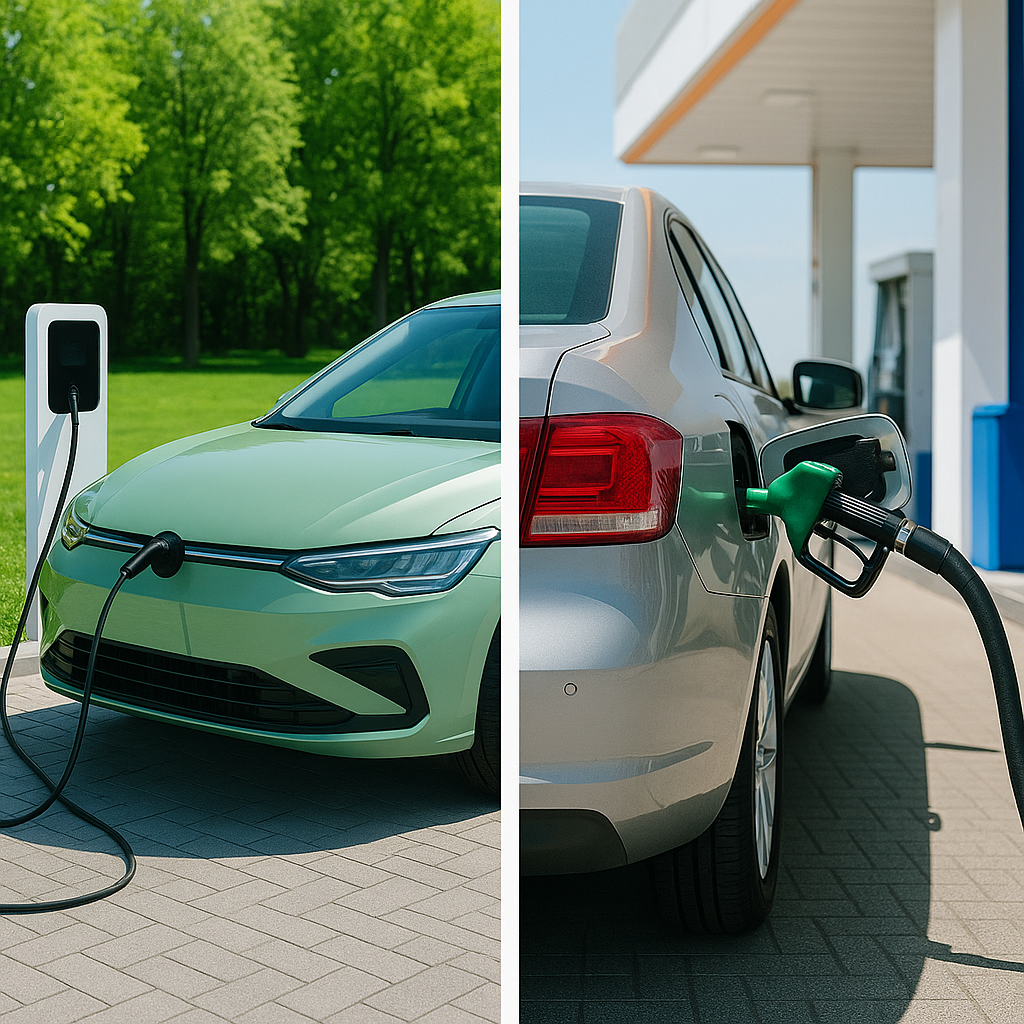
As a result, the argument around electric vehicles has grown almost as charged as the batteries that power them. On one side, EVs are celebrated as the silver bullet for carbon emissions, the future of transportation, and our ticket out of oil addiction. On the other side, critics point to mines in Chile and the Congo, heavy manufacturing emissions, and the strain on already fragile electric grids.
So, which side is right? Like most things worth debating, the truth sits somewhere in the middle.
Climate and CO2: EVs win here, but it’s not a slam dunk
On the big question of lifetime carbon emissions, EVs are hard to beat. A 2025 European Union study found new battery-electric cars produce about 73 percent less CO2 over their lifetime compared to gasoline cars. U.S. models show similar results, with sedans and SUVs cutting lifetime emissions by 66 to 74 percent according to the International Council on Clean Transportation.
The reason is efficiency. Electric drivetrains convert close to 90 percent of stored energy into motion, while gasoline engines only manage about 30 percent. Additionally, the cleaner the grid, the bigger the payoff. In coal-heavy regions, the advantage shrinks but rarely disappears.
Manufacturing and Mining: the ugly upfront debt
This is where the critics are right, sort of. EVs carry a heavy carbon backpack at birth. Manufacturing emissions are typically 40 to 60 percent higher than for a gasoline car. Argonne National Laboratory’s GREET model and multiple Life Cycle Assessment studies confirm that most of this comes from battery production.
Mining is another sore point. Lithium extraction in Chile’s Atacama desert consumes scarce water resources. Cobalt from the Democratic Republic of Congo has been tied to child labor and unsafe working conditions. That’s not clean, no matter how you frame it.
Still, the industry is adapting. Lithium iron phosphate batteries, which use no nickel or cobalt, now account for about 40 percent of global EV batteries. Recycling programs are expanding. The European Union has passed strict rules requiring carbon footprint declarations and recovery targets. The U.S. Inflation Reduction Act ties EV tax credits to responsible mineral sourcing. The trend line is moving in the right direction, even if the present reality is messy.
The Grid: strained, but not broken
Another common argument is that EVs will crash the electric grid. It’s not that simple. Yes, charging adds demand, especially at night or in clusters. But most grids can absorb it with planning. In fact, many utilities see EVs as future stabilizers. With bidirectional charging, parked EVs can feed power back into homes and networks.
The bigger challenge is whether utilities invest fast enough in renewable generation and smart infrastructure. Without that, EVs risk shifting tailpipe emissions upstream to smokestacks.
Life of the Vehicle: longevity vs. replacement
EVs usually outlast expectations. Their drivetrains have fewer moving parts, which means fewer breakdowns. Batteries degrade, but studies show most EVs retain 70 to 80 percent of their capacity after 8 to 10 years. Used packs are finding second lives in stationary energy storage.
Gasoline cars may have lower manufacturing emissions, but they bleed carbon daily. The U.S. EPA estimates an average gas car releases about 400 grams of CO2 per mile. Over a lifetime, that dwarfs the one-time hit of building an EV battery.
Non-exhaust Pollution: the sneaky middle ground
Critics often note that EVs are heavier, which increases tire wear and road dust. That is true. But regenerative braking reduces brake dust by more than 80 percent. In city driving, EVs usually come out ahead. On highways, especially with large electric trucks and SUVs, the balance can tip the other way.
Verdict: cleaner, yes, clean enough, no
Electric vehicles are better for the environment overall. They are more efficient, cleaner across their lifetime, and steadily improving as grids decarbonize and manufacturing tightens. But they are not the green halo product marketing makes them out to be.
Mining still devastates landscapes, battery production still pollutes, and heavy EVs still churn tire dust into the air. EVs are better than gas cars, but they are not good in absolute terms. They are a technology still in transition, not a final refined product, yet.
Bottom line, EVs are still in what could be considered their Model T era. Meaning, all processes associated with manufacturing, efficiency, and daily use will most likely only get better. Also, if you want “better” you have to start somewhere, even if it begins worse, which EVs no longer are.
If this struck a nerve, share it.
Subscribe to Multiple Views and…News? for more essays that question easy answers, expose comfortable myths, and challenge us to think about the world we are really building.